The Aguilar commentary. The Monroe Doctrine 2.0.
In 1823 President James Monroe issued what became known as the Monroe Doctrine. It served as a warning to European powers, not to interfere in the western hemisphere. In exchange, the United States agreed not to interfere in European affairs.
In 1904, President Teddy Roosevelt expanded the nation’s understanding of the doctrine, in what became known as the Roosevelt corollary, which was used to justify intervening in the affairs of Latin American nations. Since then, the history of American intervention in Latin American affairs, has not been a glorious one.
Beginning September 2nd, 2025, under the guise of drug interdiction, the US began bombing Venezuelan boats. To date, twenty boats have been sunk, killing 83 people. In addition, approximately 15,000 troops, are now operating in the area, including the Gerald R. Ford warship, and the USS Iwo Jima assault ship. The scenario is reminiscent of 1989, when the US invaded a Latin American nation, namely Panama, which removed Manuel Noriega from power.
The question for many people, is what is behind these attacks on boats from a sovereign nation in international waters.
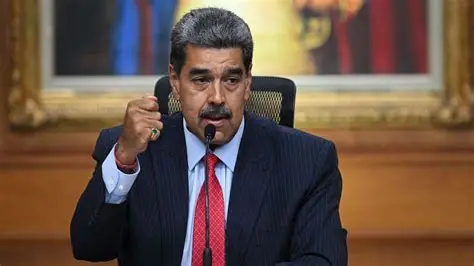
One can make a case, that this is really about regime change. Trump has been trying to remove Maduro since his first term. The second reason can be the fact that Venezuela has the largest proven reserves of crude oil. It can even be because of its inventory of rare earth minerals. The removal of Maduro would make it much easier to access both. The third reason is the administration’s belief in a multi-polar world.
No one believes the military buildup is simply because of drugs. While drugs, mainly cocaine come to the shores of America via Venezuela, experts have stated that it is minimal and is mainly moved to Europe. The most addictive drug, fentanyl, enters America mainly through Mexico.
While several countries within the Caribbean, such as Trinidad and Tobago, support the US, other nations such as Brazil, Canada, U.K. Mexico and the United Nations have opposed these actions. London, the Netherlands, and Columbia, have ceased sharing intelligence with the US because of the strikes.
Despite their own humanitarian issues, China and Russia have also condemned the strikes. As supporters of Maduro, the question is to what extent will they come to the aid of his administration.
Preventing drugs from entering America is a worthy goal that is supported by Americans. Nonetheless, the manner in which the administration is combating it, raises legal issues. While Secretary of State Marco Rubio, as well as some television commentators, have tried to explain why this is legal, most international law experts have concluded that these acts are indeed illegal. Michael Schmidt, professor of International Law at Harvard Law School’s Program stated, “in my view the right of self-defense did not justify the September 2 strikes.”
Trump’s claim to Canadian Prime Minister Mark Carney that “everyone of those boats is responsible for the death of 25 thousand American people and the destruction of families probably saves at least 100 thousand lives, American lives, Canadian lives by taking out all those boats coming in “ has been deemed as absurd by John Hopkins University professor Carl Larkin. Larkin states “He’s claiming that he solved the overdose mortality crisis, ….and that does not have any semblance of reality.”
While regime change is the more apparent goal, it must be remembered that Venezuela is not Panama. It is a much larger and more populous nation than Panama. While Maduro is unpopular, an invasion risks a rally around the flag sentiment. Maria Machado, who would most likely be the beneficiary of an American invasion, needs to ask herself if she really wants to lead a nation that is a vassal state of the US, that would be coerced into giving up a large portion of the nation’s natural resources.
On a broader scale, the question is whether these actions will continue to exasperate already tense relations between the US and many of its allies.
Because this administration is so transactional, it believes that each transaction stands on its own. Many nations, however, tend to look at American actions from a cumulative perspective. Mexico, Canada, Indonesia, South Africa, Spain, Brazil, Argentina, Kenya, consider the United States to be the biggest threat to their sovereignty.
According to the Pew Research Center over 60% of the United Kingdom believe that the United States is no longer a dependable ally.
There is no doubt that Maduro is a bad guy. The question is whether his departure from power, will be reminiscent of past American incursions into Latin America, or will it find another way that does not lead to greater instability. If history is prologue, regime change will take place, but at what cost
