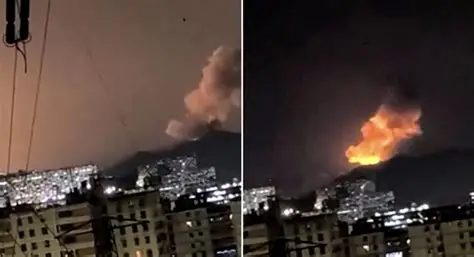
Early on Saturday morning the United States launched a military attack on the nation of Venezuela. As a result, the President of the nation, Nicolas Maduro was captured and will be tried in New York. The domestic side of this issue, including whether the administration had legal authority to engage in an attack on a sovereign nation, will certainly be a point of contention. The regional reaction from nations has been mixed. Brazil’s President Lulu stated that America “cross unacceptable line.”
The question is why did this attack take place? The administration has gone to great lengths to gas light the American people. We have heard various reasons including narco-terrorism. This had no currency given the fact that Trump pardoned the former president of Honduras Juan Hernandez who was serving a forty-year term for trafficking drugs to the US. The recent National Security Strategy laid out America’s intent to invoke a more muscular version of the Monroe Doctrine, which essentially made the United States responsible for what happens in the western hemisphere. In other words, the US will once again engage in gunboat diplomacy. The administration has stated that they consider the present government illegitimate. The problem is that this could apply to a number of nations.
The most believable reason for this attack, that has been consistently denied by the administration, is regime change. This has also been the most plausible reason for the attacks on boats as well.
In regard to oil, Deputy Chief of Staff Stephen Miller, made the absurd claim that because America helped build the Venezuelan oil industry, their oil belongs to the US. This is simply rhetoric that does not have legal standing. Venezuela did not steal oil. They had nationalized its own assets which had been taken over by companies such as Exxon/Mobil which has received compensation. Russia also has invested billions of dollars in Venezuelan oil projects as well. China has provided loans to Venezuela in exchange for oil.
How is Venezuela a threat to the United States?
Venezuela has several allies who the administration views as enemies. This includes Cuba as well as Russia who has provided military equipment to the nation. The Cuban connection is what motivated Secretary of State Marco Rubio to advocate for the removal of Maduro. There is also evidence of Hezbollah, which has been expanding its presence in Latin America.
There is no doubt that Maduro is a bad guy who stole an election and has caused great harm to the Venezuelan people. He has ruled over a nation that is effectively a failed state. The overwhelming majority of the Venezuelan people are glad that he’s gone although they may disagree with how this was done. The problem is that while Maduro may be gone, the regime itself remains. The Vice-President of Venezuela Delcy Rodriguez, who as of this writing is in Russia, remains in office as well as their Interior Secretary Diosdado Cabello, who some say may be more influential than Maduro.
The question is who will govern Venezuela. The late Colin Powell coined the phrase “if you break it, you own it” which will be apropos to the situation. While Maria Machado, the right-wing leader who Trump dismissed as not being respected enough to run the nation, may be the beneficiary of the removal of Maduro, she may have to answer for why she would be willing to allow American oil companies to once again expropriate Venezuelan assets.
As President Trump rambled during his press conference, the one thing that stood out was “we shall run the country. ” He also reiterated the lie that Venezuela stole American oil.
The bottom line is that at the end of the day this was about regime change for the purpose of reclamation. The Venezuelan diaspora is no doubt overjoyed that a dictator has been removed. Nonetheless, will the diaspora still be overjoyed when they realize that their resources have once again been expropriated with no benefit for Venezuela.
